
Whether you’re securing a construction site, organizing an outdoor event or protecting a property during renovations, one of the first questions you’ll probably ask is: how much temporary fencing do I need?
Fortunately, calculating your temporary fencing requirements is relatively straightforward. With a few measurements and an understanding of standard fence panel dimensions, you can estimate how many panels your project will require.
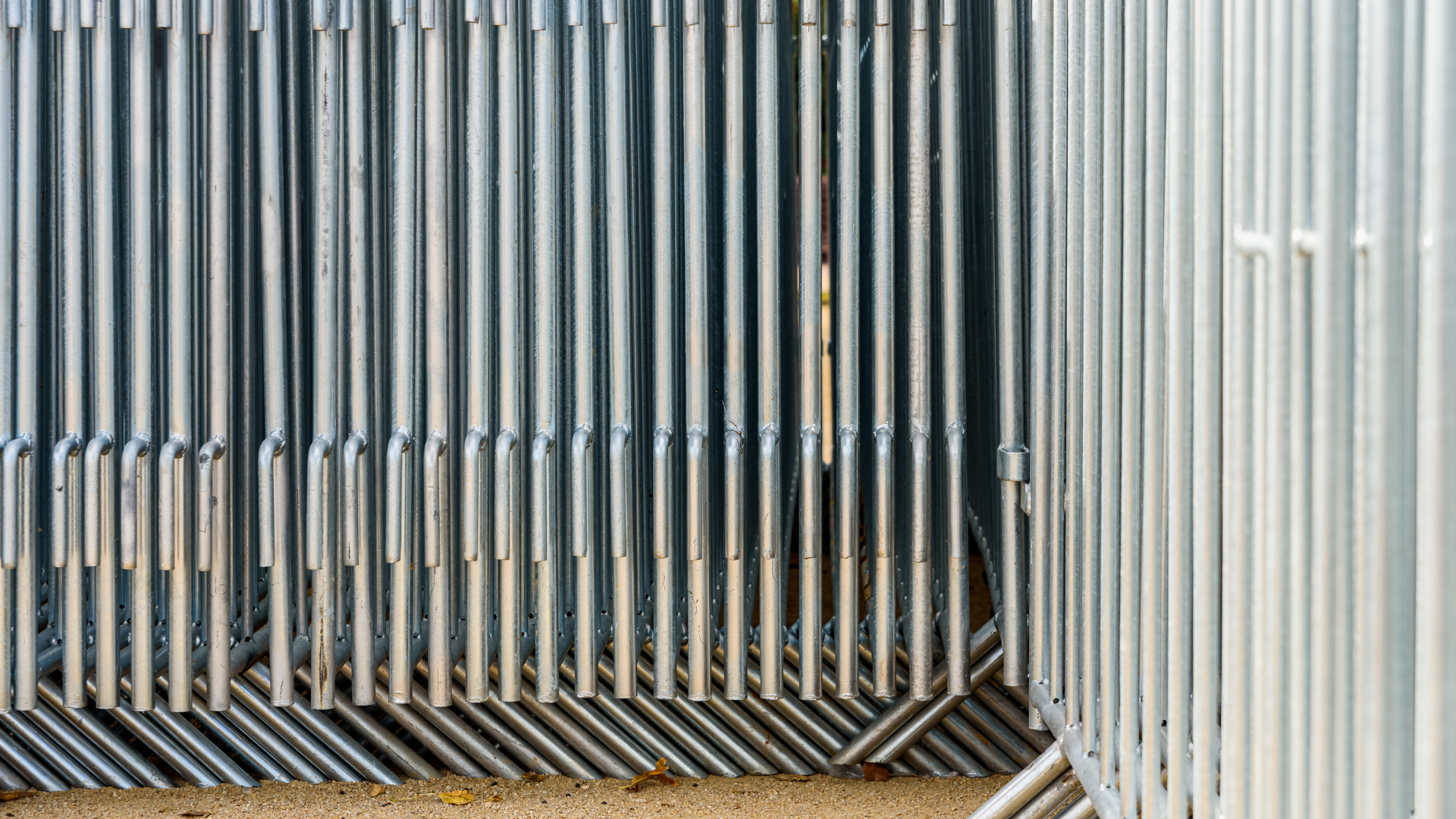
At Site Secure, we keep things simple by offering one standard temporary fence panel size: 6 feet high by 10 feet wide, available in black or silver.
Here’s how to calculate what you need.
Step 1: Measure the Area You Need to Fence
Start by determining which parts of your property or project need temporary fencing.
For a rectangular area, measure the length and width in feet.
For example, imagine you’re fencing a construction site that measures:
- Length: 100 feet
- Width: 50 feet
To calculate the entire perimeter, add all four sides together.
100 + 50 + 100 + 50 = 300 linear feet
That means you would need approximately 300 feet of temporary fencing to surround the entire site.
For an irregularly shaped property, measure each section individually and add the measurements together.
Step 2: Calculate How Many Fence Panels You Need
Site Secure’s temporary fence panels are 10 feet wide and 6 feet high.
To estimate the number of panels required, divide the total fencing distance by 10.
Using our 300-foot example:
300 ÷ 10 = 30 temporary fence panels
If the result isn’t a whole number, round up.
For example, a 175-foot fence line would require approximately 18 panels.
Remember that this is an initial estimate. Actual panel placement, corners, connections and site conditions can affect the final layout.
Step 3: Account for Gates and Access Points
Most construction sites and events require designated entry and exit points.
Before finalizing your fence quantity, consider whether you’ll need openings for:
- Construction vehicles and equipment
- Workers and contractors
- Deliveries and material handling
- Event guests and vendors
- Emergency access
A planned opening may reduce the length of continuous fencing required, but gates and access arrangements need to be considered separately.
Don’t simply subtract every opening without checking how the site will be secured.
Step 4: Consider the Layout of Your Property
Not every project requires fencing around the entire perimeter.
For example, a construction site may already have a permanent fence along one boundary. A renovation project might only require temporary fencing along the front and side of a property.
Other projects may require separate fenced areas for equipment storage, material staging or pedestrian management.
Think about the actual areas that need to be separated rather than automatically fencing every property line.
Temporary Fence Panel Calculation Examples
Here are a few basic examples using Site Secure’s 10-foot-wide panels.
| Fencing distance | Estimated panels |
|---|---|
| 50 feet | 5 panels |
| 100 feet | 10 panels |
| 150 feet | 15 panels |
| 200 feet | 20 panels |
| 300 feet | 30 panels |
| 500 feet | 50 panels |
These estimates assume continuous fence runs and do not include separate gates, special configurations or additional support requirements.
Why Standard Panel Sizes Make Planning Easier
One of the benefits of working with Site Secure is simplicity.
Instead of navigating multiple panel dimensions, customers can plan around one standard size.
Each panel provides approximately 10 linear feet of fencing and stands 6 feet high.
This makes it easier to estimate quantities, plan deliveries and discuss your requirements before requesting a quote.
We offer both black and silver panels, giving customers flexibility in appearance without complicating the sizing process.
Do You Need Professional Installation?
Some customers prefer to arrange pickup and handle installation themselves, while others would rather have the fencing delivered and installed.
The right option depends on the size of your project, available labour, site conditions and any applicable safety requirements.
Temporary fencing must be properly positioned and supported for its intended use. Projects exposed to wind, public access or other hazards may require additional planning.
Get a Temporary Fencing Quote in Southern Ontario
Once you have an approximate fence quantity, the next step is getting a quote.
Site Secure provides temporary fence rentals throughout Southern Ontario, including Toronto, Hamilton, Mississauga, Brampton, Burlington, Oakville and surrounding communities.
With black and silver 6 ft × 10 ft panels, flexible pickup and delivery options, and installation services available, we make temporary fencing straightforward.
Request a Temporary Fencing Quote
Not sure exactly how many panels you need? Tell us about your project and we’ll help you work through the requirements. Reach out at info@sitesecurefencing.ca
