
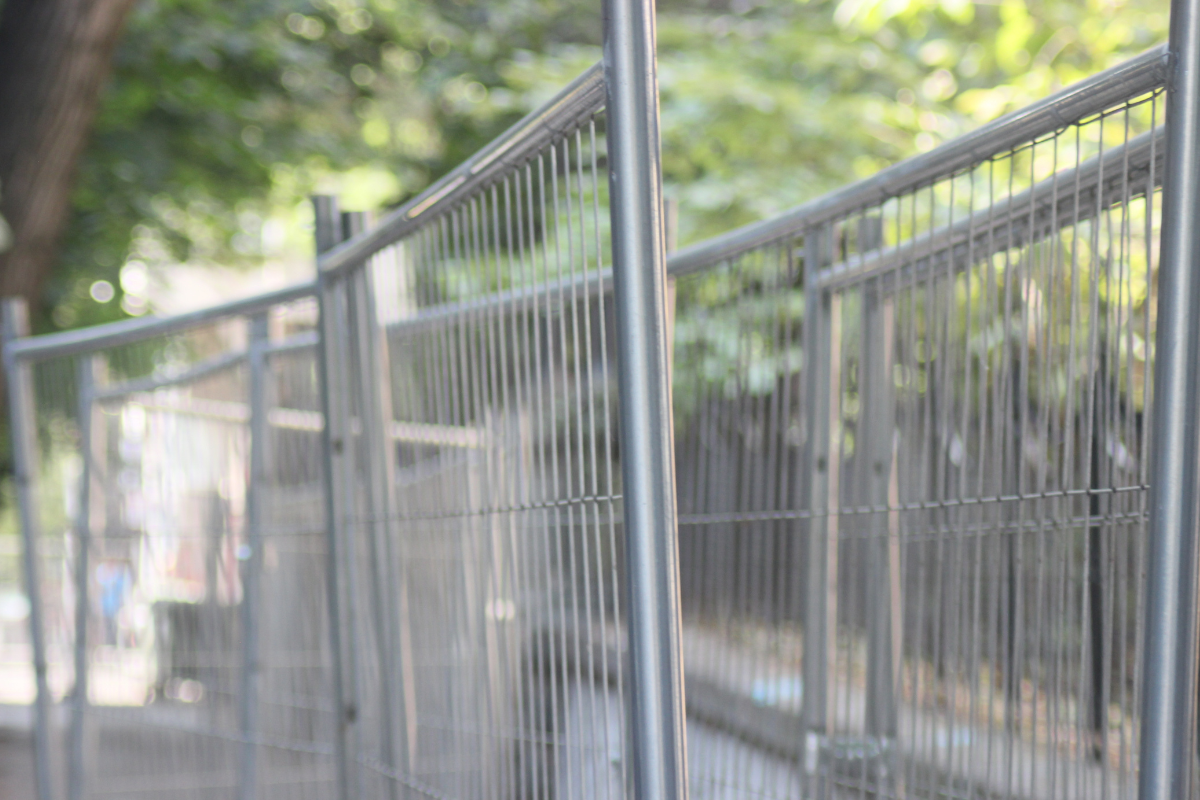
Whether you’re managing a construction project, organizing an outdoor event, or completing a renovation, temporary fencing helps keep site organized.
Additionally, when comparing renting temporary fencing vs buying temporary fencing, you can weigh cost, flexibility, and setup time.
When evaluating renting temporary fencing vs buying temporary fencing, consider your needs.
Should you rent temporary fencing or purchase your own fence panels?
Both options have advantages.
Additionally, renting temporary fencing vs buying temporary fencing depends on usage frequency.
It also depends on how long you need it and on resources to transport, install, and store it.
For many contractors and event organizers in Southern Ontario, renting temporary fencing offers a convenient and cost-effective alternative.
Moreover, the choice of renting temporary fencing vs buying temporary fencing avoids upfront costs.
Additionally, here’s what to consider before making your decision about renting temporary fencing vs buying temporary fencing.
What Is the Difference Between Renting and Buying Temporary Fencing?
When you rent temporary fencing, you pay to use fence panels for an agreed period without purchasing the equipment.
Depending on the rental company and your project requirements, you may be able to arrange pickup, delivery, installation and teardown.
When you buy temporary fencing, you own the panels and are responsible for storing, transporting, maintaining and eventually replacing them.
Purchasing can make sense for businesses that use fencing regularly and have the space and equipment needed to manage it.
Renting is often more practical for temporary projects, occasional use and customers who want to avoid the responsibilities of ownership.
The Benefits of Renting Temporary Fencing
1. Lower Upfront Costs
One of the biggest advantages of temporary fence rental is avoiding a large initial equipment purchase.
Instead of buying enough panels to surround an entire project, you pay for the fencing during the period you need it.
This can be particularly beneficial for homeowners, event organizers and contractors working on occasional projects.
Renting also helps businesses preserve capital for other equipment, materials and operating expenses.
2. No Long-Term Storage Requirements
Temporary fence panels take up considerable space when they’re not in use.
For example, 30 standard 10-foot-wide panels provide approximately 300 linear feet of fencing.
Once the project is finished, those panels need somewhere to go.
If you purchase them, you’ll need suitable storage space and a way to organize and protect the equipment between projects.
With rental fencing, the panels can be returned or collected when the rental period ends, depending on the service arrangements.
3. Flexible Quantities for Different Projects
Not every project requires the same amount of fencing.
A residential renovation might need 100 linear feet, while a larger construction project could require several hundred feet or more.
Renting allows you to select quantities based on the specific project rather than purchasing enough equipment to cover every possible future requirement.
This flexibility is particularly useful for contractors who work on sites of different sizes.
4. Pickup, Delivery and Installation Options
Transporting temporary fencing requires appropriate vehicles and equipment, particularly for larger quantities.
Rental services can make the process easier by offering delivery and installation options.
At Site Secure, customers can choose pickup or delivery, with installation and teardown services available.
This allows you to decide how much of the work you’d prefer to handle yourself.
5. Less Equipment to Maintain
When you own temporary fencing, you’re responsible for managing damaged or worn equipment.
Panels, connections and supports may require inspection, maintenance or replacement over time.
Renting reduces the need to maintain a permanent inventory of fencing equipment, although customers still need to use rental equipment properly and comply with their rental agreement.
When Does Buying Temporary Fencing Make Sense?
Although renting offers several advantages, purchasing temporary fencing may be worthwhile in certain situations.
Frequent, Ongoing Use
Construction companies that consistently need temporary fencing across multiple projects may benefit from owning their own inventory.
If the panels are regularly used rather than sitting in storage, purchasing can become more economical over time.
Available Storage Space
Businesses with a yard, warehouse or equipment storage facility may already have the space required to store temporary fence panels.
This can reduce one of the major disadvantages of ownership.
Existing Transportation and Installation Resources
Contractors with suitable trucks, trailers and employees may be able to transport and install their own fencing without significant additional expense.
Predictable Fencing Requirements
If a company regularly uses the same quantity and type of temporary fencing, purchasing may offer better long-term value than repeatedly arranging rentals.
However, ownership costs should still be considered.
Renting vs. Buying Temporary Fencing: Cost Comparison
The most important consideration is the total cost over time.
Purchasing temporary fencing involves more than the initial price of the panels.
You may also need to account for transportation, storage, maintenance, replacement parts and employee time.
Renting typically involves a rental charge, with additional costs potentially applying for delivery, installation, teardown or other services.
Here’s a general comparison:
| Consideration | Renting temporary fencing | Buying temporary fencing |
|---|---|---|
| Initial investment | Usually lower | Higher |
| Equipment ownership | No | Yes |
| Long-term storage | Not required after return | Required |
| Transportation | Pickup or delivery options | Owner’s responsibility |
| Installation | May be available as a service | Owner arranges |
| Maintenance | Rental provider maintains its inventory; renter has care obligations | Owner’s responsibility |
| Flexibility | Rent quantities for each project | Limited by owned inventory |
| Frequent long-term use | Recurring rental costs | May offer better value |
Neither option is automatically cheaper in every situation.
The right choice depends on how often the fencing will be used and the total costs associated with each option.
How to Calculate Whether Renting or Buying Is Cheaper
A useful way to compare the two options is to estimate the total cost of ownership against the total cost of renting over the same period.
For purchasing, consider:
- Cost of fence panels and required accessories
- Transportation expenses
- Storage costs
- Installation and removal labor
- Maintenance and replacement costs
- Expected resale value
For renting, consider:
- Rental rate and duration
- Number of panels required
- Delivery or pickup arrangements
- Installation and teardown charges
- Any additional fees under the rental agreement
For example, a contractor who needs temporary fencing for one three-month project may find renting more practical than purchasing dozens of panels that won’t be needed afterward.
On the other hand, a contractor who uses the same fencing throughout the year may find that ownership makes financial sense.
Comparing actual quotes and expected usage is the best way to make an informed decision.
Should You Rent Temporary Fencing for a Construction Site?
For many construction projects, renting temporary fencing is a straightforward option.
Construction schedules can change, site layouts may evolve and the quantity of fencing required can vary throughout the project.
Rental fencing allows contractors to arrange equipment for the expected project duration without making a permanent investment.
Temporary fencing may also be necessary to help meet applicable construction safety requirements.
In Ontario, Regulation 213/91 – Construction Projects establishes requirements for protecting people using public ways where construction activities may create a danger.
For more information, read our guide to Temporary Fencing Requirements in Ontario.
Is Renting Temporary Fencing Better for Events?
For most one-time events, renting temporary fencing is generally more practical than purchasing it.
Festivals, outdoor markets, community celebrations and corporate events often require fencing for only a few days.
Purchasing panels for a short event can create unnecessary transportation and storage challenges.
Renting allows event organizers to arrange the fencing they need for the event and return it afterward.
Temporary fencing can help establish event boundaries, organize vendor areas, separate equipment and manage access points.
The layout should be planned around the event’s specific needs, including appropriate entrances, exits and emergency access.
How Much Temporary Fencing Will You Need?
Before comparing rental and purchase costs, you’ll need an approximate quantity.
At Site Secure, we use standard temporary fence panels measuring 6 feet high by 10 feet wide.
Each panel provides approximately 10 linear feet of fencing.
For a basic estimate, divide the total fencing distance by 10 and round up to the next whole panel.
For example:
- 100 linear feet requires approximately 10 panels
- 200 linear feet requires approximately 20 panels
- 300 linear feet requires approximately 30 panels
- 500 linear feet requires approximately 50 panels
Actual quantities may vary depending on gates, corners, openings and site conditions.
For more information, read How Much Temporary Fencing Do I Need?.
Why Rent Temporary Fencing From Site Secure?
At Site Secure, our goal is to make temporary fence rentals simple, affordable and convenient.
Rather than offering a complicated selection of panel dimensions, we focus on one standard size: 6 feet high by 10 feet wide.
Our temporary fence panels are available in black or silver, allowing customers to select an appearance that suits their project.
We offer flexible rental options, including:
- Standard 6 ft × 10 ft temporary fence panels
- Black and silver fencing options
- Customer pickup
- Delivery services
- Installation options
- Tear-down services
- Short-term and longer-term rentals
Our lean operating model helps us keep overhead low and offer competitive pricing.
Whether you’re managing a small renovation or a large construction project, we aim to make temporary fencing straightforward from start to finish.
Temporary Fence Rentals Across Southern Ontario
Site Secure provides temporary fencing rentals throughout Southern Ontario, including Toronto, Mississauga, Brampton, Hamilton, Burlington, Oakville, Vaughan, Markham, Kitchener, Waterloo, Cambridge, Guelph, Brantford, Niagara Region and surrounding communities.
If you’re comparing the cost of renting versus buying temporary fencing, we’re happy to provide a quote based on your project requirements.
Let us know how many panels you need, where your project is located and how long you expect to need the fencing.
Request a Temporary Fencing Quote
Professional Equipment. Reliable Solutions.
